What Is Distributed Acoustic Sensing? A Complete Guide


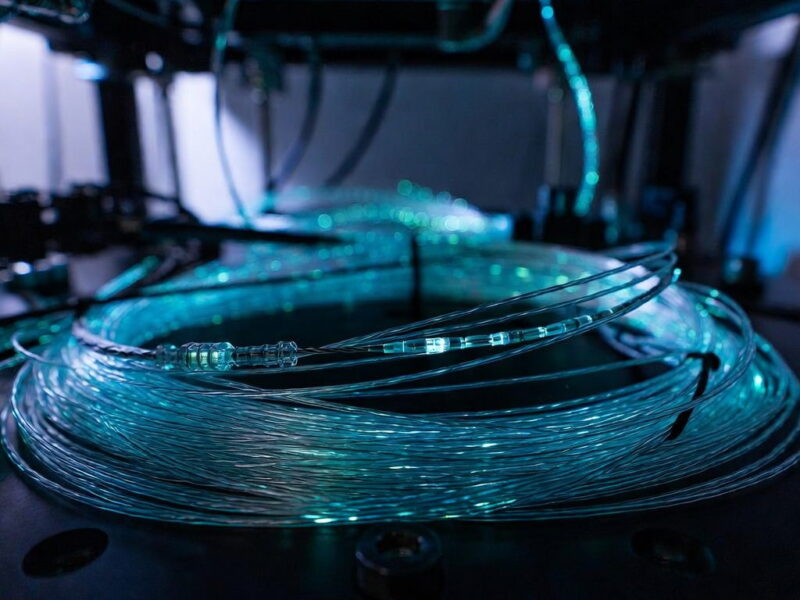
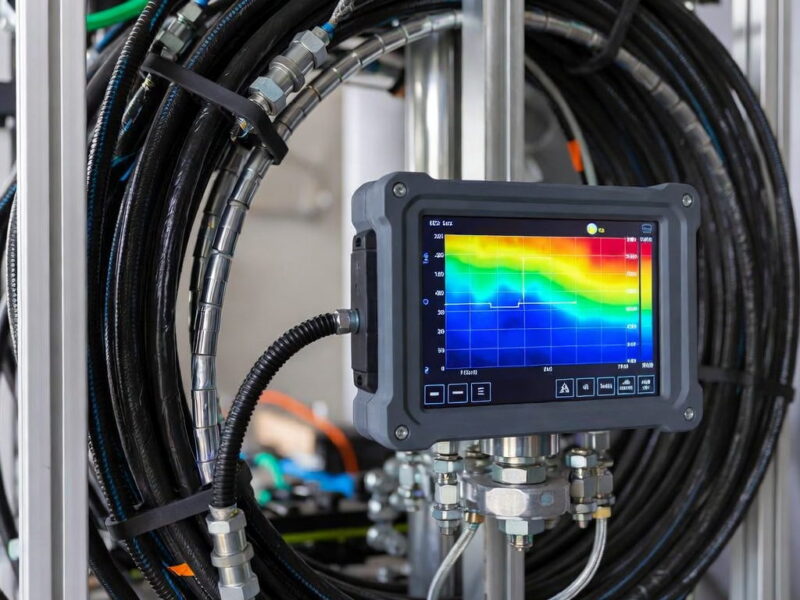
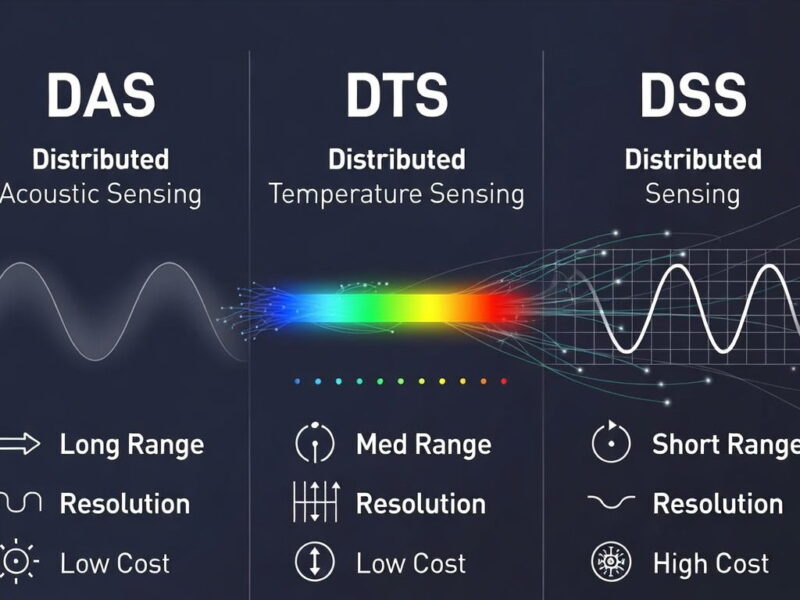
Distributed Acoustic Sensing (DAS) is a technology that transforms an ordinary optical fiber into a continuous array of acoustic sensors. Unlike traditional point sensors that detect events only at fixed locations, DAS monitors every meter of a fiber cable simultaneously — covering distances up to 100 km from a single interrogator unit.
How DAS Works
DAS systems send short pulses of laser light down a fiber optic cable. As light travels through the fiber, a small fraction scatters back toward the source — a phenomenon called Rayleigh backscattering. Any vibration or acoustic event along the cable causes a tiny strain that changes the phase of this backscattered light.
By analyzing these phase shifts with high temporal resolution, the DAS interrogator can pinpoint the exact location and characteristics of any mechanical event happening along the cable — with channel spacing as fine as 0.1 meters.
Key Applications
- Pipeline monitoring: Detect third-party intrusion, leaks, and geohazards in real time along hundreds of kilometers.
- Railway monitoring: Track train position, speed, and direction across an entire network without adding trackside hardware.
- Perimeter security: Detect and classify intruders along fence lines, borders, and critical facility perimeters.
- Seismic monitoring: Record ground motion across wide areas for mining, volcano monitoring, and early warning systems.
DAS vs. Traditional Sensors
Conventional monitoring relies on discrete sensors — geophones, hydrophones, accelerometers — installed at specific points. DAS replaces hundreds of point sensors with a single fiber, dramatically reducing installation cost while increasing coverage density. The fiber can be an existing telecommunications cable, making deployment especially cost-effective in corridors where fiber is already installed.
BiiSensing Eagle DAS
The Eagle DAS interrogator delivers 50–100 km range with 0.1 m channel spacing and gauge lengths starting at 10 m. It supports both standard single-mode fiber and existing dark fiber in buried cables — making it ideal for operators who want to leverage existing infrastructure investments.